




Choose your country and language
Language

There you are, hard at work at the keyboard — perhaps editing video, with 12 Chrome tabs open and about to launch a game you think your PC can handle — and BOOM, it happens.
The machine freezes. The cursor stutters as if possessed. The fans go into war-zone mode. Chrome says "not responding", and you say "not again!"
Sound familiar?
It is not you. It is your PC. And it is overloaded. Like an intern during exam week without coffee.
But here is the funny part: your computer actually tried to warn you — you just were not listening.
No, it does not talk (unless you count Windows' beep of doom). But your CPU and RAM are constantly working. They juggle your tasks, and sometimes they simply drown in them.
Wouldn't it be nice to knowwhen your PC is about to buckle under stress — before everything explodes?
Imagine simply glancing at a little screen and thinking:
"Ah. Yes. Perhaps I shouldn't have opened Photoshop, Spotify, Discord and Blender at the same time."
This is where system monitoring comes in. It is like a Fitbit for your computer — except instead of counting steps, it tells you how close your PC is to a digital collapse.
Enter: Curious Scientist, who takes the idea of a "resource monitor" quite literally. Forget apps and pop-ups — this is physical hardware, built with:
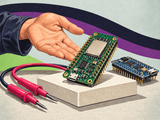
A custom-built ATmega32U4 microcontroller board (yes, that is the brain)
Connected to a small 1.3-inch, 128x64-pixel OLED screen
Built into a 3D-printed CRT enclosure that screams: "I'm from the '90s — but I'm smarter than your PC."
The firmware is Arduino-based and listens over USB. It receives CPU usage, total RAM, and free RAM — and puts the numbers up on the OLED. Complete with neat little progress bars. SO stylish.
Because your PC deserves better than being silently worked into the ground like a child in a 19th-century factory.
Because it is great to knowhow much memory your machine is eating before it says goodnight.
Because it is fun to build things like this. It is like LEGO for adults — but with LEDs and a purpose. You get the feeling of taming technology and end up with a gadget that actually helps you keep track of your digital life.
Curious Scientist does not drop a tech bomb in your lap. It is all actually quite easy:
Connect the ATmega32U4 board to your PC via USB
Flash it with the firmware
Install a small C# program that retrieves system data every two seconds
Let the microcontroller display everything on the OLED
Bonus: if your PC goes to sleep, the gadget notices — and politely turns off the screen after 45 seconds. It has manners.
Curious Scientist guides you through everything with charm, humor, and surprising warmth. You learn:
Why: Your PC is overloaded and silent
What: A mini ATmega32U4 + OLED gadget that displays load in real time
How: Build, solder, flash, plug in, go
The result: Your computer's brain, displayed in style
No boring tech babble. No know-it-all nonsense. Just pure, curious nerdiness of the best kind.
So if your computer has been suffering in silence and you are ready to admit that Task Manager is a nightmare to open in a panic...
💻 👉 Check out the blog post right here:
Go to Curious Scientist's blog post
Give your PC a voice. Give yourself a little peace of mind.
And most of all — stay curious.
Language
