




Choose your country and language
Language

eBits Academy
Understand the links, choose suitable parts and build with LoRa, Meshtastic, Reticulum and the electronics behind them.

The radio workshop
 LoRa
LoRaRange, airtime and power: understand the radio before choosing a network.
Read the guide Meshtastic
From two nodes to useful messaging, coverage planning and troubleshooting.
Read the guide Reticulum
Connect radios and computers. Meet RNode, LXMF and the different network layers.
Read the guide RF
RFAntenna types, placement, connectors and cable loss, with a repeatable comparison method.
Read the guide VSWR
VSWRWhat happens without an antenna? Understand reflections, VSWR and safe antenna changes.
Read the guide LNA / PA
Gain, noise and power: why receiver and transmitter amplifiers have different jobs.
Read the guide RF / LO / IF
RF, LO and IF: follow the signal through frequency conversion and filtering.
Read the guideMore projects, explanations and ideas from the eBits Academy.
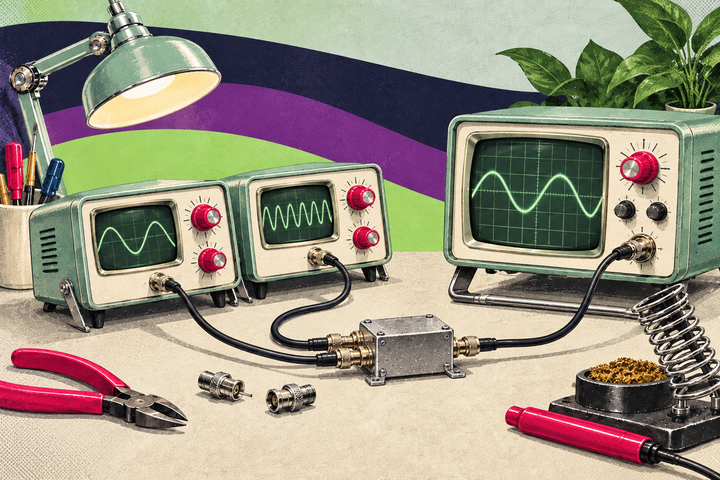
A radio mixer is not an audio mixing desk. It is a frequency-conversion circuit. By combining an incoming signal with a local oscillator,...
Read the guide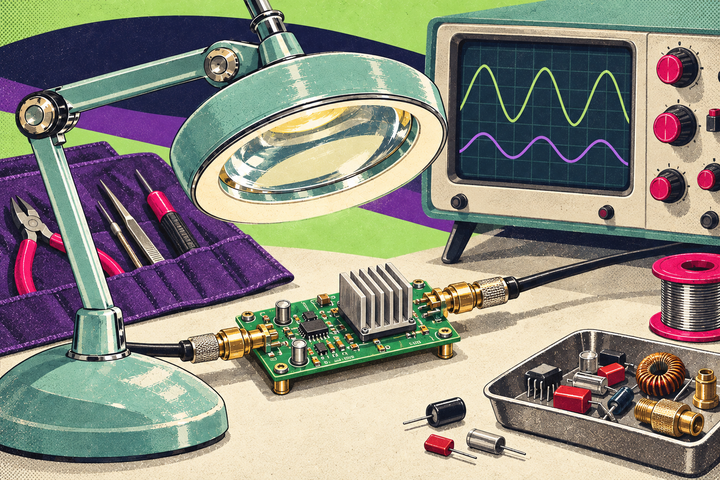
“Add an amplifier” sounds like a simple way to improve a radio link. In practice, you must first identify which end of the...
Read the guide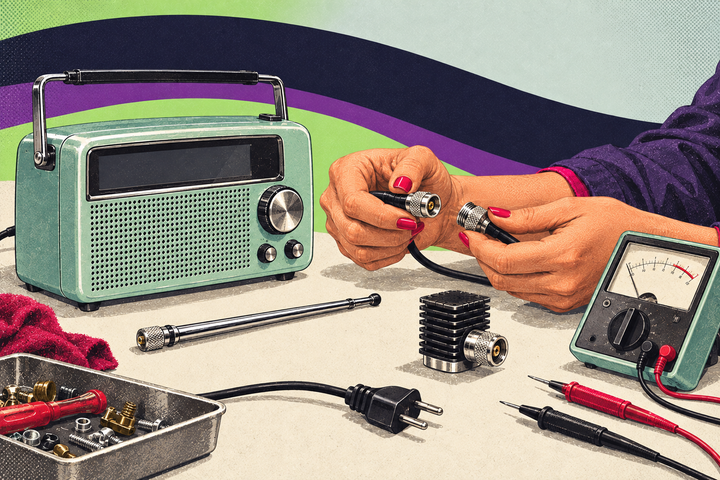
Yes, it can, but “powered on” and “transmitting” are different states. The main concern is a transmitter delivering RF power into a load...
Read the guide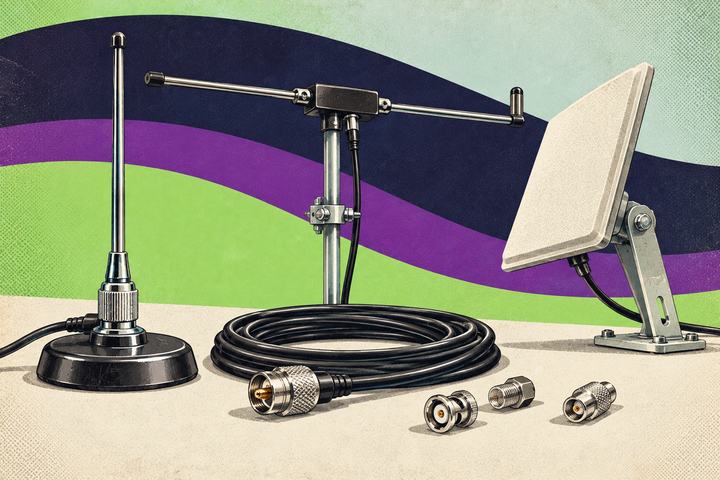
An antenna is part of a complete radio installation. Its frequency range, radiation pattern, polarisation, connector, cable and mounting position all matter. Buying...
Read the guide
Reticulum is a way to build data networks across different communication media. LoRa can be one of those media, but Reticulum is neither...
Read the guide
A successful Meshtastic project is not the one with the most nodes on a map. It is the one that delivers the messages...
Read the guide
LoRa is useful when a small amount of information needs to travel farther than an ordinary short-range radio link. It does not turn...
Read the guide
Bluetooth started in the early 1990s as a surprisingly modest idea: replace clunky serial cables. Engineers wanted a simple wireless bridge between devices,...
Read the guide
If you’ve ever wondered how to add real, expandable storage to your microcontroller projects, the article CH32V003F4P6 – SD card with FatFS is...
Read the guide
Every project eventually needs a way to interact, and sooner or later, that means buttons. But wiring buttons can be surprisingly tricky, especially...
Read the guide
If you’ve ever tinkered with motors, robotics, or motion tracking projects, you know how crucial accurate angular feedback can be. In his latest...
Read the guide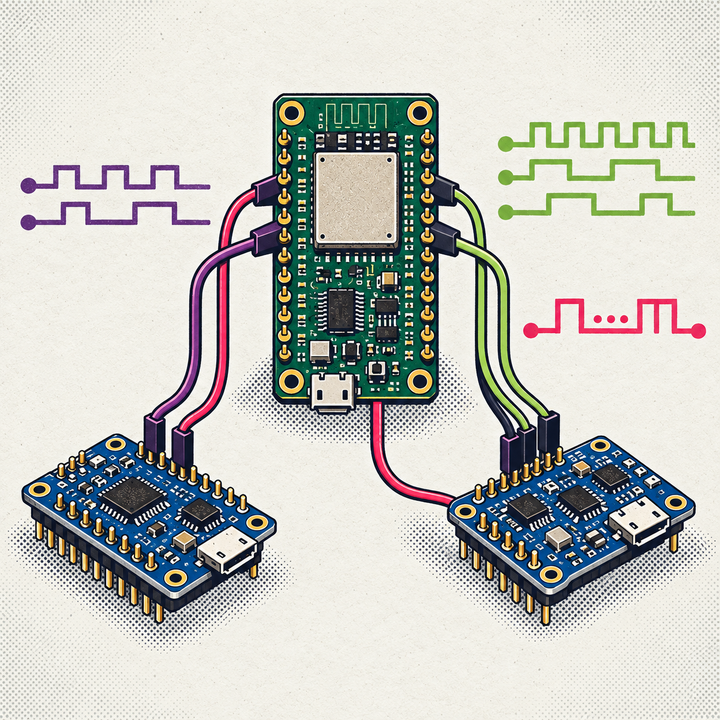
You’ve probably heard people throw around the term “SPI” when talking about microcontrollers and sensors — but what exactly is it? And why...
Read the guideLanguage
